
Project Overview
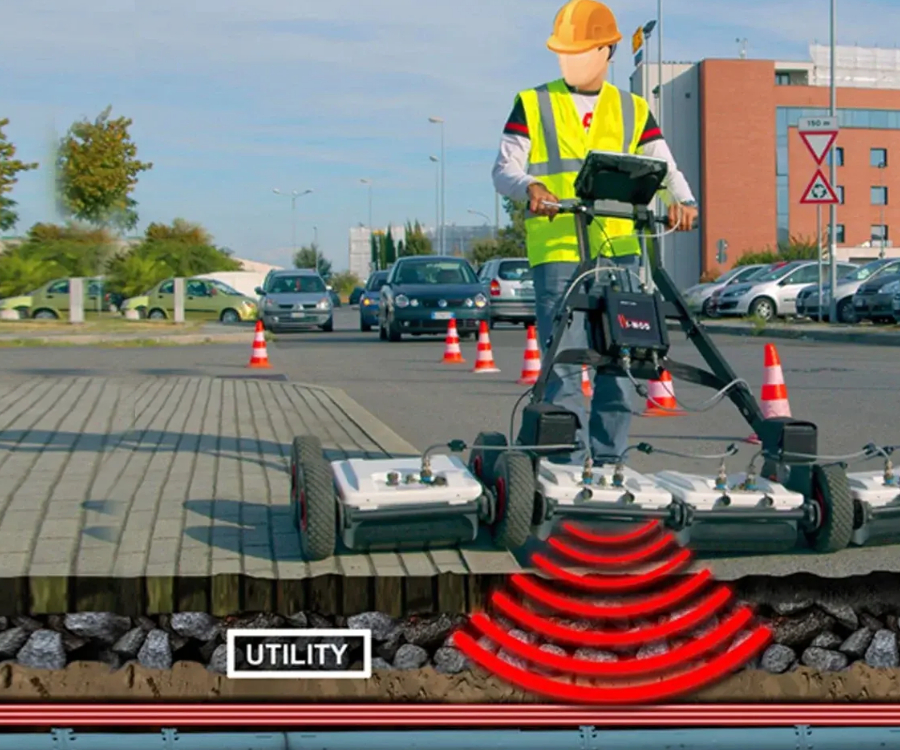
Utilities and construction surveys are critical for the planning, design, and execution of construction projects and infrastructure development. They ensure that utilities (like water, electricity, and gas) and construction activities are accurately mapped, planned, and executed. Here’s a breakdown of each:### Utilities Survey**Purpose**: Utilities surveys are conducted to map out and document the existing utility infrastructure in a given area. This includes underground and above-ground utilities such as water lines, sewer systems, gas pipelines, electrical cables, telecommunications infrastructure, and other service lines.**Key Components**:- **Mapping Existing Utilities**: Identifying and recording the location, depth, and type of utilities.- **Coordination**: Ensuring that new construction or modifications do not interfere with existing utilities.- **Data Collection**: Using tools like ground-penetrating radar (GPR), electromagnetic locators, and GPS to accurately locate and map utilities.- **Updating Records**: Keeping utility maps and records up-to-date for future reference and planning.**Benefits**:- **Avoiding Conflicts**: Reduces the risk of damaging existing utilities during construction.- **Safety**: Enhances safety by providing information on potential hazards.- **Efficiency**: Streamlines construction planning and reduces delays.### Construction Survey**Purpose**: Construction surveys are conducted to ensure that construction projects are built according to design specifications and plans. They provide the necessary data for layout, alignment, and elevation of various construction elements.**Key Components**:- **Site Layout**: Marking out the boundaries and key features of the construction site according to the design plans.- **Control Points**: Establishing reference points to ensure that construction elements are positioned accurately.- **Elevation and Alignment**: Measuring and verifying elevations and alignments of structures, roads, and other elements.- **As-Built Surveys**: Documenting the completed construction as it was built, comparing it to the original plans.**Benefits**:- **Accuracy**: Ensures that construction is performed according to design specifications.- **Quality Control**: Helps identify and correct errors early in the construction process.- **Compliance**: Ensures compliance with regulations and design standards.### Techniques and ToolsBoth types of surveys use advanced tools and techniques to achieve accuracy and efficiency:- **GPS**: For precise location and alignment data.- **Total Stations**: For measuring angles and distances.- **Laser Scanning**: For detailed 3D mapping and documentation.- **Drones**: For aerial surveys and capturing large areas.